Implementation & Operation

AI solutions implement effectively

Use case validated, budget approved? We’ll develop your AI solution to production-ready status in eight to twelve weeks, from architecture through data integration and model development right through to go-live and handover to your team.

YourData sources ERP & CRM Corporate-systems Your data sourcesERP & CRMBusiness systems

How does an AI solution make the transition from prototype to productive operation?

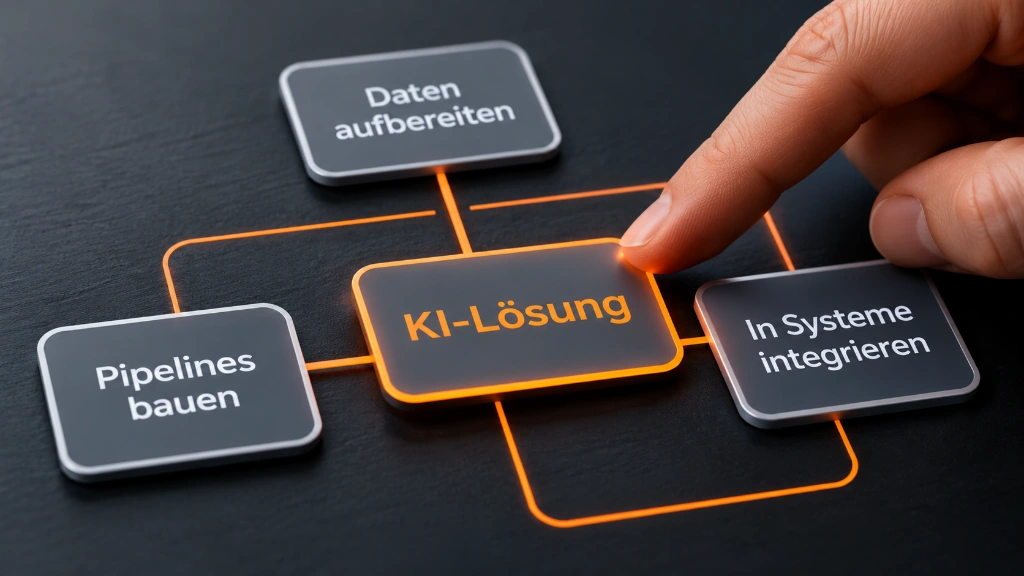
This requires a validated use case, accessible data, a robust architecture and a handover that your team can take forward. This is precisely what we develop in the AI Sprint: a prioritised use case is implemented to production standard within eight to twelve weeks and handed over to your team. The bulk of the work lies between a functioning prototype and a solution that can be sustained in day-to-day operations. This includes data connectivity, model quality, integration with ERP or CRM systems, testing by the business department, operation and handover.
Four points need to be clarified:

01

The use case has been validated

The use case was prioritised and identified as the most important candidate.

02

The Proof of Value has been completed

Technical feasibility and business impact have been confirmed.

03

The data is available and accessible

The relevant sources are well-known and readily available.

04

The budget has been approved

The business case has been approved and the investment authorised.

If any of these conditions is not met

If priorities have not yet been set and it is still unclear which use case is worthwhile, the AI Discovery Workshop is the ideal place to start. If the data is unusable, a Data Sprint starts one step earlier and establishes the data foundation.
Procedure

How does the Data Sprint work? at collana?

Setup and architecture

Weeks 1 to 2

Define the target architecture, set up data integration and infrastructure, define key performance indicators, and clarify the regulatory framework.

Data Integration & Backup

Weeks 2 to 4

Building pipelines, ensuring data quality, feature engineering, documentation.

Development and Training

Weeks 4 to 8

Develop and train a model, assess bias and fairness, and optimise performance.

Testing and optimisation

Weeks 8 to 10

User acceptance testing within the department, security testing, performance tuning, incorporating feedback.

Deployment and handover

Weeks 10 to 12

Production roll-out, setting up monitoring, documentation and handover, go-live.
The range depends on the complexity of the use case and the number of connected systems.

Who is working on that

An AI sprint requires more in-depth technical expertise than a strategy workshop.
AI Architect
Responsible for the target architecture, modelling approach and choice of platform.
Machine Learning Engineer
Handles model development, training and the assessment of quality and bias.
Data Engineer
Builds data pipelines, ensures quality and integrates systems.
Sprint Lead
Coordinates and maintains communication with your stakeholders.

What you end up with

A fully developed, tested and deployed AI solution

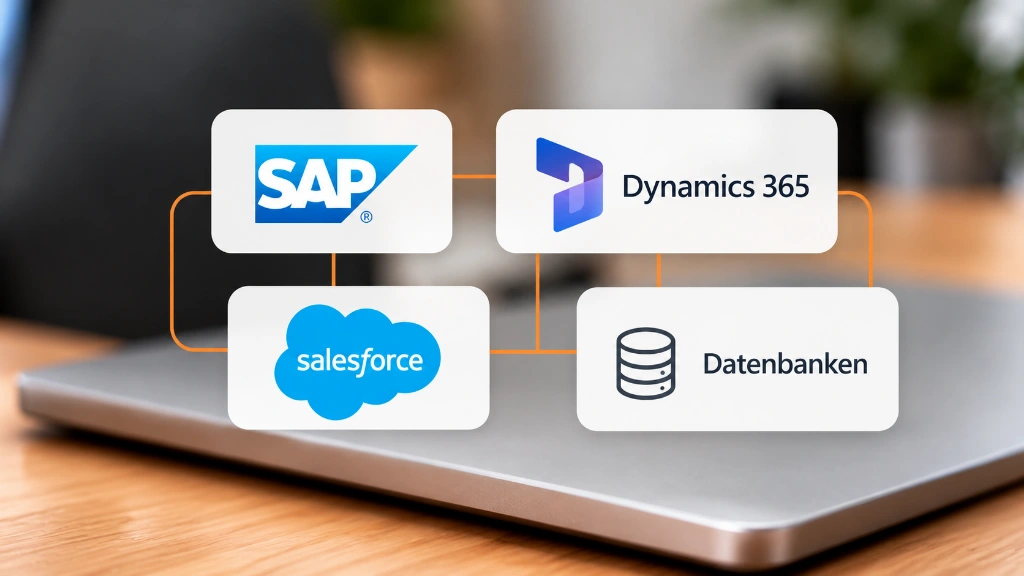
Interfaces to your business applications, such as CRM, ERP or databases.

Architectural, model and operational documentation for your in-house team
Structured knowledge transfer through training and handover

The handover is a separate phase

This final point determines whether the solution will continue to be used after the sprint. That is why the handover is a phase in its own right and not merely an add-on.
High-risk obligations

AI implementation and the EU AI Act

The regulatory classification plays a key role in determining how an AI solution must be built. That is why we clarify this during the architecture phase, rather than after the go-live.

Risk class first

We will determine which risk class your use case falls into. This will determine which requirements apply in terms of documentation, logging and human supervision.

Transparency requirements are already in force

The obligations under Article 50 have been in force since 2 August 2026 Applicable. Where people interact with an AI system or where content is generated by AI, this must be clearly identifiable.

The high-risk obligations will come later, not at all

For stand-alone high-risk systems as defined in Annex 3, they were applied to the 2 December 2027 postponed; for Kl in regulated products as set out in Annex 1, to the 2 August 2028. Their content has not changed.

The evidence base is established during the sprint

Architectural, model and operational documentation, as well as the assessment of quality and bias, are already part of the process. Regulatory evidence can be built upon this.

We do not provide legal advice. We simply provide the technical basis for it.

Why collana

Why collana

We are familiar with the systems into which the integration takes place

collana implements ERP, CRM and line-of-business applications. If your AI solution integrates with these, we won’t need to have the landscape explained to us first.
We build on the database that we create ourselves

If it’s missing, the Data Sprint comes first. The same teams, the same architecture.

As a Microsoft Solutions Partner

We work in accordance with the manufacturer’s standards, from Microsoft Foundry to Azure.

Frequently Asked Questions about Data & AI

What is an AI sprint?

A clearly time-bound implementation sprint in which a prioritised AI use case is developed to production-ready status. The focus is deliberately on a single use case, rather than on several in parallel.

How long does it take to implement an AI solution?

We expect it to take between eight and twelve weeks. The actual timeframe will depend on the complexity of the use case, the data available and the number of systems involved.
Do we need a proof of value before the sprint begins?

Generally speaking, yes. The sprint assumes that feasibility and benefits have been confirmed. If this is still unclear, we will discuss during the initial consultation which intermediate step would be appropriate.

What happens after the go-live?

Your team will take over a documented solution, including monitoring. If required, we can support you with its operation and further development.

How are bias and model quality addressed?

Both are an integral part of the development phase. Models are checked for quality, performance and distortions before they are sent to the relevant department for testing.

Does the Sprint take the EU AI Act into account?

Yes. Classification into a risk class takes place during the architecture phase, as it determines which requirements apply in terms of documentation, logging and human oversight. The transparency obligations under Article 50 are already applicable; the full high-risk obligations will come into force from December 2027. The documentation produced during the sprint forms the basis for the evidence.

Can we continue to run the solution ourselves?

Yes, the handover is structured with this in mind. Architectural, model and operational documentation, as well as training, form part of the final phase.

Does the AI solution have to run in the cloud?

No. Depending on your data protection and data residency requirements, we operate solutions within your Azure environment or entirely on-premises.

The next one Step

During the free initial consultation, we’ll review your validated use case and define the scope for the sprint.